The dependable default
Fiberglass Insulation
Fiberglass is the most widely used insulation in American homes for good reason: it performs predictably, it costs less than the alternatives, and it suits most standard framed cavities. The whole job is in the fit.
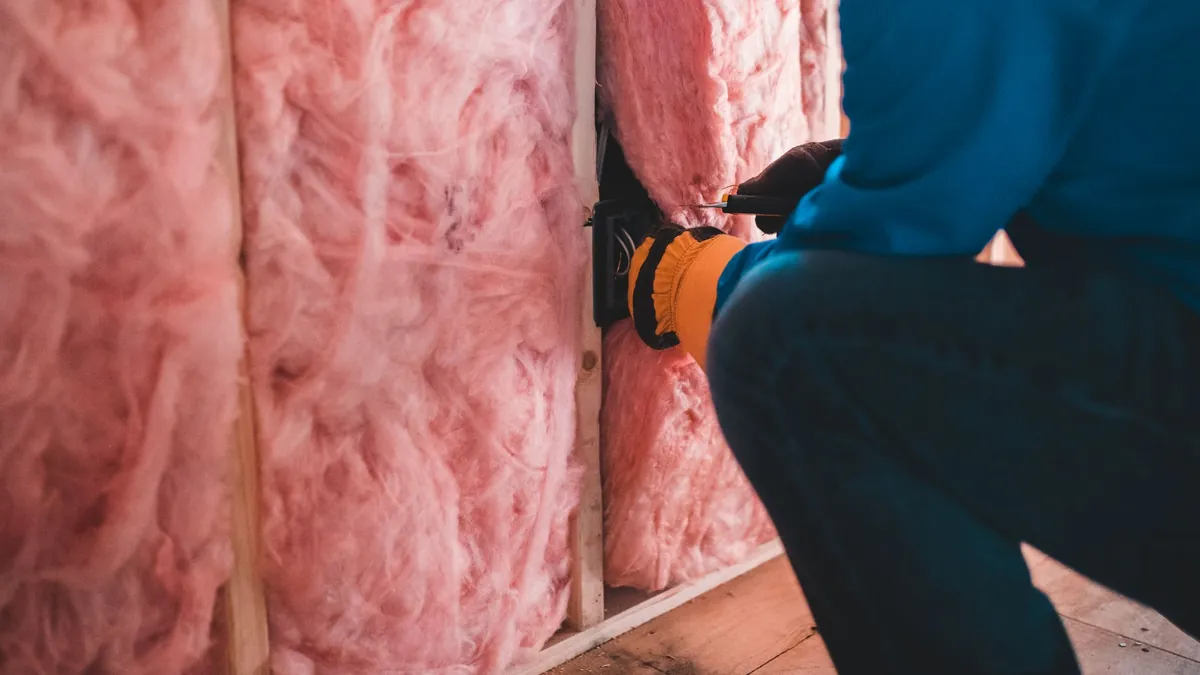
Where fiberglass goes
- Walls, floors and framed cavities
- Attic floors and joist bays
- Available as batts or as loose fill
- Non-combustible and does not settle when installed dry
Good for
Standard framed walls, floors over crawl spaces, attic joist bays, and any job where predictable performance at a sensible price matters more than squeezing the maximum R-value into a thin cavity.
Worth knowing
It only performs at its rated value when it completely fills the cavity without being compressed. Gaps at the edges, or a batt stuffed in behind wiring, quietly cost you most of what you paid for.
What to expect
How a job actually runs
Four stages, in this order, every time — whether it is one attic or an insulation package across a subdivision.
Assessment
We look at the actual building before anyone quotes a number — the attic, the crawl space, and the places air moves between them. You get told what is failing and why, including the parts we would leave alone.
Material Selection
Fiberglass, spray foam, loose fill or batt: the assembly decides, not the price list. We explain which one belongs where and what the difference actually buys you before anything is ordered.
Installation with energy and noise efficiency
Installed for how it performs, not how it looks from the hatch. Full coverage at the right depth, no compressed batts or missed corners, and the air sealing that makes the insulation behave — which is also what makes a house quieter.
Upkeep
Insulation is not maintenance-free. We tell you what to keep an eye on, roughly when it is worth checking, and what a roof leak, a rodent or a duct repair means for the material we just installed.
FAQ
Fiberglass Insulation questions
Is fiberglass still a good choice?
For most of a typical house, yes. It is well understood, it is affordable, and installed properly it does exactly what it is rated to do. The places it is not the right answer are tight cavities that need more R-value per inch, and assemblies that have to be air-sealed as well as insulated — that is where foam earns its cost.
Batts or blown fiberglass?
Batts suit clean, accessible, regularly framed cavities. Blown fiberglass suits open attic floors, because it self-levels around joists, wiring and bracing instead of needing to be cut around them.
Is fiberglass safe once it is installed?
Once it is in place and covered by drywall or sitting on an attic floor, it stays put. The precautions are for the install itself, which is our crew’s job, not yours.
The jobs it goes into
Where we install it
Where most of the heat moves
Attic Insulation
In a Georgia summer the attic is the hottest part of the house and the biggest gap in its thermal envelope. We bring it up to a real depth in the material the assembly calls for, and seal the ceiling plane underneath first.
Learn moreCold floors and damp air
Crawl Space Insulation
Crawl spaces drive the two complaints we hear most in older houses: floors that are cold all winter, and a humid, musty smell that gets pulled up into the living space. Both are fixable, and both start underneath.
Learn moreOther materials
Insulates and air seals at once
Spray Foam Insulation
Foam is the answer where a cavity has to be both insulated and sealed, or where there simply is not enough depth to hit the target with anything else. It expands into the gaps that batts and loose fill cannot close.
Learn moreBlown in, evenly covered
Loose Fill Insulation
Loose fill is blown in rather than laid in, so it gets into the awkward parts of an attic floor that a cut batt never sits flat against — around joists, wiring and bracing — and builds one consistent blanket at the depth the assembly needs.
Learn morePre-cut, for regular framing
Batt Insulation
Batts come pre-cut to standard framing widths, which makes them fast and predictable in walls, floors over crawl spaces, garage ceilings and interior sound walls — wherever the framing is regular and reachable.
Learn moreIs fiberglass right for your job?
Sometimes it is, sometimes something cheaper does the same work. Tell us about the assembly and we will give you a straight answer.
OpenMonday – Saturday9:00 AM – 5:00 PM